Wednesday, November 24, 2010

Interesting Note and Reminder

As most anyone has probably noticed, this blog is pretty much inactive. However, I've looked back over it, and I wrote a lot of good stuff on financial mathematics, finance, and accounting. I'm still available for questions/comments at guardian.market@gmail.com. (I've set it to forward to my RL email, so I'll get emails much quicker now.)

Also, one item keeps surprising me. One post in particular keeps getting a lot of comments/questions. It's my one on how to make a stock index. Turns out, if you Google "How to make a stock index" it's result #4! I guess I'm one of the few that dared to delve into that topic.

I hope all is well in SL. I've pretty much left that world for real-life endeavors. Since I last posted, I've become an official actuary (title and everything) and that keeps me pretty busy. I'll try to post when I can. If anyone still reads this, post a comment to let me know!

Saturday, November 22, 2008

Retained Earnings Part II

After I left the previous post, Bogart Beck, head of SL CapEx, and I had a nice discussion about RE, the Balance Sheet, and how things are supposed to be set up. Both approaches have their merits, but I wanted to explain his side of the story (as best I can), and show why the financial templates were set up as they were. (Note to Bo: If you were to post a current financial reporting template somewhere on CapEx, that would be much appreciated!)

In my previous post, I explained that

RE(t) = RE(t-1) + NI(t) - Div(t)

Which is still true, and it's how I learned it in my first accounting class. I believe this is also GAAP-compliant. Bogart, however, wanted to make it a little easier for the average investor to be able to "follow the money" through the financial statements from month to month, and in so doing, rather confused those who were more familiar with the previously stated method.

For SL CapEx, Bogart was trying to set up a system where the RE reported on the Income Statement was directly carried over to the Balance Sheet, and what was formerly in the place of the RE on the Balance Sheet was transferred to some other account, say Capital Surplus. So, at the end of the month, here's what the (simplified) journal would look like:

Account..................................DR....................CR

Retained Earnings................RE(t-1)...........................
Capital Surplus...............................................RE(t-1)

Net Income...........................NI(t)..................................
Dividends..............................Div(t)................................
Retained Earnings...................................RE(t) = NI(t) - Div(t)

This way, an investor can look and see how the Income Statement carries through to the Balance Sheet.

However, Bogart has confirmed (I believe) that the GAAP method is acceptable as well. At least, he hasn't stopped me from using it on SLR's finances, yet. I will continue using the GAAP method, as it is the one I understand best.

Friday, October 3, 2008

Retained Earnings

One little description, so much power. The description of Retained Earnings on the SL CapEx template balance sheet formerly read

"TAKE DIRECTLY FROM LINE 523 of INCOME STATEMENT"

And this description can still be found on a few of the financial statements running around CapEx. The unfortunate part about this description is that it is wrong. (For one, the income statement only goes to row 53 in Excel, so that should be a first clue that something is odd.)

Retained Earnings is an account in the Equities Section of the Balance Sheet. It is a cumulative (read that word again - cumulative) account of all earnings that a company has retained since inception - hence the name "retained earnings." The tricky part about this account is that it is cumulative. In order to calculate Retained Earnings (RE) correctly, you must do it from the start.

Let's think about how to calculate RE. The first question is, "What is earnings?" Most would agree that earnings can be calculated as Revenues - Expenses. The Income Statement labels that number as "Net Income," so we'll refer to earnings as Net Income (NI).

The next question is, "How does a company retain earnings?" It's actually easier to address how a company does not retain earnings, and that is by paying dividends. When a company pays a dividend, then it is distributing part of its earnings out to its shareholders, who receive them. Therefore, the part NOT paid in dividends is the part of earnings that is retained. We'll call dividends "Div."

So, then we have a formula:

Retained Earnings = Net Income - Dividends
RE = NI - Div

(The second equation is the same as the first, but in the shorthand I noted above.) This is the exact formula that is calculated on the Income Statement, Line 53 (in the template I'm using).

The problem is that this RE is not equal to the RE on the Balance Sheet. The RE on the income statement represents the CHANGE in RE for this period on the Balance Sheet. Here's an example:

April 2008: Retained Earnings is calculated to be L$1,200
May 2008:
  • Company has NI = L$1,500 and pays Div = L$1,000
  • RE on the Income Statement is calculated as NI - Div = L$1,500 - L$1,000 = L$500
  • RE on the Balance Sheet is calculated as RE(old) + RE(new) = L$1,200 + L$500 = L$1,700.
We can also write out a formula for RE on the Balance Sheet. It goes:

RE(t) = RE(t-1) + NI(t) - Div(t)

In words: Retained Earnings this period equal Retained Earnings last period plus net income this period minus dividends this period.

I hope that clears up some of the mystery with this line on the Balance Sheet. I see a lot of companies with incorrectly calculated RE, and it's really a pretty simple line to do. If you have any questions, feel free to leave a comment - anyone can.

Saturday, August 2, 2008

Where to Go?

Let's face it. Volumes on SL Capital Exchanges (all of them) are dismal, and liquidity is a major concern for investors. "Why should I plunk down several thousand of my hard-earn Linden Dollars if it'll take me months just to sell at a break-even price, and that's if I'm lucky?" With liquidity locked up, major investors will have a hard time realizing a profit on their investments, even if the market values of the particular stocks rise. So how do we fix this?

It seems that whenever a SL company goes belly-up, the CEO simply throws their hands in the air and walks away. That's because it's a possibility in Second Life. There is no chain connecting the CEO to the viewer which makes him or her responsible. Threats of legal action are simply idle talk, as even recovering something like $20,000 USD (about L$5.4 million) would be silly in the context of lawyers' and courts' fees (not to mention your time) to get it.

Certain exchanges have made progress in the realm of removing the complete anonymity of CEOs by requesting IDs for IPO clearance. Nevertheless, even if you know their ID, what good does it do you? Again, legal fees are too prohibitive.

I hesitate to say it, but I think it may be time to tie some more legal strings around the CEOs of SL companies. Some have suggested using promissory notes, but it sounds more like a fidelity bond issue to me, if there was an insurer who would ever cover it. The point remains the same, though: sending a message to CEOs that this is more than a game (in spite of the hypocritical boilerplate language at most exchanges), it is a responsibility which will reach out and slap you in real life if needed.

Before I let this tirade go too far, I do realize that this is not always something that a CEO wants to take on. I daresay that the salaries earned by most SL CEOs are nowhere near enough to compensate for the trouble which these legal ties could cause in real life. Maybe that's the answer, but I hope not.

I'd love to know how to restore investor confidence, but I'm just not seeing a way of doing it without giving investors some sort of recourse for CEO inadequacy or fraudulant activity.

Anyone else have other ideas? Comments?

Saturday, July 26, 2008

It's been awhile...

So, it turns out I've been pretty bad at posting over the last few months. I've had things to keep me busy: one of my actuarial exams, work, RL moving, vacation, getting engaged, etc., so it's not like I'm short on excuses. Nevertheless, I think I should try to post and keep updating this thing periodically.

It seems like interest has waned in the market. I'm not entirely surprised, as most of the markets are rocked by scandal after scandal. New money coming in is kind of rare, as it seems that those who are involved with the markets currently are the only ones who would like to be involved. The lack of liquidity also frightens new investors, as the market value of securities is significantly more than the liquidation value (that is, if you sold all your shares as fast as you could) for almost every security, and even for modest amounts of shares.

For example, take SLR, the company I'm CFO for. (This is in no way a critique of my shareholders, but if I'm going to pick on a company, I might as well hit home.) Suppose I owned 10,000 shares of SLR right now. The market price shown on CapEx is L$6,500. However, if I actually tried to sell all 10,000 shares, I would receive (after commission) L$5,153.02, which is 79.3% of the displayed price. Make it 50,000 shares and I would only receive 12.9% of my displayed market value!!! And we're not talking vast sums of money here - 50,000 SLR shares at market is worth about $120 USD. Enough to care, but not enough to break most of us financially.

You can play this game with almost any stock on any market. There are exceptions, where management has taken care to set aside cash reserves to prevent this from happening, but by and large putting money into the market means you will need to take your time getting money out of the market.

I've heard the idea of market makers being tossed around before. For those of you who don't know, a market maker is a person/firm that makes money off the bid-ask spread in the market. They provide liquidity. However, from my previous actuarial exam (which I passed, by the way!), Modeling Financial Economics, market makers need options in order to protect themselves. There are techniques whereby market makers can insure themselves against large price changes, or even set themselves up to make money if the market doesn't move. However, these require options, which no exchange in SL has been willing to set up yet.

If any exchange in SL is seriously interested in setting up options and market making and similar techniques, please contact me. While I'm sure I'm not the only person in SL who understands how to make it work, I'm likely one of the few, and I would love to help.

I suppose the question is this: How do we revitalize the markets now? I think liquidity is the major issue, but I would like to hear what others think as well.

Tuesday, June 10, 2008

Benevolent dictatorship

Noun: A dictatorship in which the leader has power only because the people choose to allow them to remain. This necessitates a wise use of power and generally prevents abuses since the benevolent dictator loses power if they are unsuitable. (From the Wiktionary)

Why this post? There is currently some debate going on here at Your2ndPlace and at the International Stock Exchange.

The debate seems to be "Bottom-Top Vs. Top-Bottom" management/regulation and according to someone the VSTEX has moved from the first to the second stance, effectively aligning with the WSE.

This post will be probably disappoint someone. It won't be a deep analysis of the pros and cons of both stances. Here I won't be trying to change anyone's mind. People have been arguing on issues since the human race was born. They'll still do after this post of mine.

First off, to me financial markets on Second Life could be related to the situation in the US before the Securities Act of 1933. You can translate that into "an unregulated situation" if you like. Since that Act, more steps were taken but we won't go over the whole process now.

Let's just say that in SL we lack a lot of things (when it comes to policies, regulations, governing bodies and applicable laws) that we can have in "real life".

When the VSTEX was started there was an optimistic view of a community wanting and willing to work together, in order to build a lively virtual stock exchange. That was the philosophy before I joined the VSTEX (which happened a few later of it going public) and I must admit I quite liked it.

It did not work that way though. Now one may say that we just changed our mind, that we woke up one day saying "To the hell with shareholders, we'll do what we want and so be it".

Over the time we found out (the hard way) that exchange users were of 2 kinds: educated and uneducated (with the latter group being apparently the majority). Educated users know what they do, they often know how to game the system, sometimes they are not so well intentioned and they may resort to practices that would be frowned upon in the real world (when those practices are not outright illegal).

Of course there is nothing wrong with educated users per se, on our exchange there is plenty of well intentioned, honest, educated users.

Maybe we failed to create the conditions to develop a thriving community capable of setting standards and rules. That's a possibility. At the beginning we were too new to have a significant amount of honest, well educated users. There were the WSE, the SLCAPEX, the ISE. Extablished, bigger markets.

It didn't take much time before we had to face the Jasper Tizzy issue. Everyone who's been following SL financial news for a while should know about it. That led us to the conclusion that extra steps had to be taken, steps that the community wasn't still asking for. Almost all the requests we got at that time were along the lines of "Where's my money, I want my money, give me back my money".

Following that, we had to take a decision (someone here may argue "You really had to?" to which I would answer "Hell, yes") because we really did not like the "The CEO has fled, there's no money left, the company is delisted. Have a nice day." attitude that was standard for other exchanges I believe, before WSE's WTF (World Traders Fund) was born.

That decision was, to look for someone willing to take over the company (actually, the name and the listing with us since no money was left behind by the old CEO), trying to revive it and turn disgruntled shareholders into happy ones. At that time we did not realize it, but it was the first step for top-bottom management and regulation. Nobody ever asked for that (maybe because it was so unusual?), yet we did it. In the aftermath of the AVC history, I can tell we opened a canning of worms. However, I don't regret that decision. None of us VSTEX managers does.

Since then there have been issues with other companies and while the rules we've been adding have been implemented without directly asking the investors or running polls, the investors (of course, some of them) themselves have been asking us via emails and support tickets to build up our rules and make our control on listed companies more tight.

I'll quote Konner McDonnell:

"Evolving. Changing. Remembering. Like I expect all virtual exchanges SHOULD."

And Cocky Dagger:

"Sometimes issues can be more complicated than they appear and I would say the obvious choice is not always the best choice. I actually started out early on with one belief and time and experience has caused me to do a 180 from where I was at."

We reckon that some sections of our website should be updated and that we may want to rethink our strategies and goals. I could go on for miles here, however I'll cut it short here. I'll just invite everyone to our General Discussion forum (a VSTEX account is needed to login update: now everyone can browse our forums). We're always open to discussion.

Saturday, May 17, 2008

Options: Lesson 2

Guardian's Note: This is a continuation (though much overdue) of a previous post which I wrote awhile ago. Reading that post will likely be necessary for a good understanding of this one.

Now that you have a good intuitive understanding of what a call and put option on a stock are, and how to use them, let's think about how to price them.

When building a model for options pricing, there tend to be a set of convenient assumptions made to simplify the process. First, there are no transaction costs or taxes. Secondly, you can buy or sell as much of any stock/option without altering the price. Thirdly, volatility (we'll get to that later) will be known and constant. I think that's all I'll need for this lesson.

Certainly, the value of the option is determined by the value of the stock at some given point in time. If the option is European, then the only relevant value is the price at the end of the time period.

Suppose we have a stock at price S0 currently, and there is a European call option expiring at time 1 with strike price K = S0. Now, in this particular oversimplified world, the stock can only take on two values at time 1: Su and Sd, standing for an "up" movement and a "down" movement. Since the option is at strike K = S0, the option will pay (Su - S0) at Su and zero at Sd. We'll denote these values by Cu and Cd respectively (representing the value of the call at an up movement and the value of the call at a down movement).

The price of the option can then be calculated as

Cu * P(up movement) * v

Where v is the present value factor to discount the payoff with interest back to time zero. We'll need an interest rate to do that, which we'll call r. We'll also need P(up movement) (the probability of an up movement) to calculate the price.

Through some mathemagic which I think I'll gloss over for now (but if you all want to see it, I'll happily spell it out), a probability which correctly calculates the price can be found using this formula:

P(up movement) = (e(r-d)*h-d)/(u-d)

Where r is the continuously compounded rate of return, d is the continuously compounded rate of dividend payments, h is the time period (in years), d is the multiplicative factor by which S can decrease over h, and u is the multiplicative factor by which S can increase over h.

There are also formulas for u and d, but if you need those I suggest reading this.

With all of that in place, there is now a formula for pricing a call option where the stock has only two movements, up or down. This model can be expanded to include more periods, use discrete dividends (say the stock pays $10 at time 0.75), handle American options, and do a variety of other nice tricks. However, the more important fact is that this is the backbone of the famed Black and Scholes model, which I will discuss in Lesson 3.


I hope you can see how this all gets very hairy mathematically very quickly. Some of the background I jumped over is done not by mathematical proof, but by economic logic, which may not sit well with some mathematicians. I have also tried to simplify a lot of this to be read by the general audience, whereas for the last four months I've been studying the specifics of this, and more complex models, extensively. If any of you readers are curious about this topic on a deeper level, feel free to post here, IM me in world, or email me at guardian.market@gmail.com. I can't guarantee I'll know the answer (it's a big world out there with options!) but I'll try to at least point you in the right direction.

Friday, May 2, 2008

My Lack of Posting

...has been due to studying for my next actuarial exam, Exam MFE (scroll down a little to the Financial Economics segment).

I'll be more active after the 15th.

My apologies for the lack of mathematical reading.

Wednesday, April 9, 2008

Mathematical Evangalism: The Monty Hall Problem

Every once in awhile, I have to go on a streak of public education for the betterment of society. The Monty Hall problem presents such an opportunity and just cause for such evangelism, as this non-intuitive probability problem routinely trips up even sharp-minded folk. So, I present to you a problem:

Suppose you're on a game show. You've made it to the final round, and there are three doors presented. Two of the doors have a goat behind them, meaning you win nothing, and the third holds a new car. Choose the door with the car, and you win that. You make your choice, and before revealing your choice, your host (Monty Hall, hence the name) opens one of the remaining two doors to reveal a goat. He then asks you if you'd like to switch. Is it advantageous to switch doors? What is your probability of winning if you do/do not switch?

...think about it...

...got an answer in mind yet?

The surprising answer is that switching gives you a 2/3 chance of winning. Most people guess 1/2 - there are two doors remaining, and one of them is right. However, let's think of this differently.

When you first choose, you have a 1/3 chance of getting the right door. Then, an incorrect door is revealed. If you were originally right and you switch, you're now wrong. But if you were originally wrong and you now switch, you're right. Because you had an initial chance of 2/3 of being wrong, by switching you now have a 2/3 chance of being right, hence the answer.

Don't believe me? Play a few rounds online and convince yourself.

Tuesday, April 8, 2008

Land Prices

Linden Labs announced recently that it would be dropping prices of land sales significantly. New islands, for example, will only cost USD$1,000, down from USD$1,675 as last I recall.

Talk about a way to piss off your most loyal supporters! Everyone currently holding land just took a major hit to their resale value, and my understanding was that land prices had been dropping anyway. While this will certainly encourage new growth, I think there will be a painful period of losses for existing (especially startup) businesses as well. As the new land is sold, those owners can price their rents lower and simply outbid the current ones still paying off their $1,675.

Linden Labs is obviously placing a bet on the elasticity of demand for land. Elasticity, for the uninitiated, is how much the quantity demanded of a good changes with respect to a price change. Some goods, like (some) electronics, are very elastic - small drops in price will produce large sales and vice versa. Other goods, like salt, aren't elastic at all ("inelastic") - you can double the price of salt, and people will still buy about as much as they did before. A few very rare goods, like gasoline, are inelastic in the short run and elastic in the long run...but I'm getting off-topic...

If the demand for new land is elastic, LL will see a large jump in sales for their drop in price. My guess is they're hoping this outweights (a) the amount of anger they're generating, and (b) the amount of extremists who go researching into OpenSim projects.

Let's see how the bet pays off.

Monday, March 24, 2008

A Balance Sheet in Motion

By popular demand (both of you), I am going to do an elongated article on balance sheets, what they measure, and perhaps more importantly for my readers, how they change. This article will be pretty basic, and isn't likely to solve your specific reporting needs, but hopefully will give you a better understanding of how these crazy financial templates are supposed to work.

The first question I had when I heard the name "Balance Sheet" was, "well, what does it balance?" The answer is that it is a demonstration the accounting equation is in balance, hence the name. This all-important accounting equation is highly important, and is written as:

Assets = Liabilities + Equity

Every transaction that a business does affects this equation. Let me go through a few examples. In each of these cases, the amount of the transaction is not important, and so will be represented by x.

Case 1: You spend money on land

Land is an asset. Cash is an asset. Therefore, the equation changes by

Assets - x + x = Liabilities + Equity

Case 2: You take out a loan to buy land

Land is an asset. A loan is a liability.

Assets + x = Liabilities + x + Equity

Case 3: You sell some stock for cash.

Cash is an asset. Stock is an equity.

Assets + x = Liabilities + Equity + x

You'll notice that in all of these cases, the balance equation doesn't change. The x's always cancel out. This is important, because it keeps the equation in balance. The equation should never be out of balance - it indicates an error. This is one of the fastest ways to show if someone knows what they're doing with a balance sheet - if it doesn't balance, it's clearly wrong.

So, you might ask, if the balance equation never changes, how do I show that my business is growing or (hopefully not) shrinking? The answer comes with Retained Earnings (RE). Retained Earnings is an equity account and is basically equal to Net Income - Dividends Paid. Say, for example, that you make some profits and receive them in cash. Your balance equation changes by

Assets + x = Liabilities + Equity + x

You'll notice that even though the entire equation grew by x, the equation is still in balance.

The balance sheet shows the composition of your company, and RE is the mechanism through which the whole company grows or shrinks. There are other accounts which can do this as well, but RE is by far the most common.

I thought it might be instructive to give a series of examples of how a balance sheet for a fictional company might change over time. Therefore, I've developed a Google Document with different tabs, each tab showing a different step in this company's development. At each step, I will only list non-zero accounts, and will provide a proof that the balance equation is working. As a commentary, I'll also post step-by-step comments here that you can read along.

Spreadsheet Link

The first step is boring. A new company is born! However, this company is nothing more than an idea.

All accounts are zero, and the equation is an exciting 0 = 0 + 0. At least it works.

Step 2: The company issues 1,000,000 shares of stock and gets L$1,000,000 cash.

Equities increase and cash increases. Note that I'm not messing with Par Value for this example.

Step 3: The company buys a small plot of land for L$100,000 and builds a store on it for L$50,000.

Plant, Property, and Equipment is the store, but they had to pay cash for it so this decreases.

Step 4: The company pays a designer L$30,000 cash for the right to sell their designs in the store.

Since the company now has some inventory to sell, the company needs to record the cost of this inventory. Notice that inventory is not equal to the potential revenue from this product, but rather the cost in obtaining it.

Step 5: The company meets another designer and wants to buy their design for L$20,000. However, the company decides to wait and pay this designer at some point later, instead of right now. The designer is OK with this and gives the company the designs.

Now the company has a liability, called "Accounts Payable" because they will at some point have to pay this new designer. However, they also got inventory to sell in exchange for taking on this liability. Notice that this is the first point in this exercise where the company has actually changed value from their original L$1,000,000. This is because they are leveraging themselves using debt, which will eventually need to be paid back with another asset (probably cash). When this happens, the liability will disappear, along with the corresponding amount of cash to go with it.

Step 6: The company spends L$100,000 advertising their wonderful new business.

Marketing is not an asset. It is temporary, and thus is recorded on the income statement. However, we lost cash, and so we still have to make the balance equation work. In order to do this, imagine an income statement with just one entry on it: marketing expense of L$100,000. This would carry down through to net income, where it would then go to Retained Earnings! That's what's happening here. Because I'm doing this step-by-step this may seem a little strange, but this is what happens every day in business. It's just that the reporting periods clump groups of transactions into time periods, which are easier to understand.

Step 7: The company's advertising pays off! They get L$200,000 worth of sales!

Now Retained Earnings will increase by the revenue they received. Cash will also increase to balance this out.

Step 8: The company decides to pay off that second designer, now they they've sold some of his designs. They send him L$20,000.

Now the liability will go away and cash will decrease.

Step 9: The company issues a dividend for L$50,000 to its shareholders.

Dividends come out of Retained Earnings. The formula for RE is actually

Old Retained Earnings + Net Income - Dividends = New Retained Earnings

Cash decreases, and so does RE.

Step 10: The company pays L$10,000 worth of tier payments on their land.

This costs cash, and tier payments are on the income statement, meaning they will come out of retained earnings. Therefore, cash and RE both decrease.

Notice how at every transaction, the balance equation is kept in balance. This is demonstrated on every step throughout this elongated example. If at any point the equation is out of balance, something funny is going on or a transaction hasn't been recorded properly, and so it's time to examine the process.

Now I know it's not practical to keep a running balance sheet for most SL businesses. However, I think that most CEOs should at least be aware of how the transactions they're doing affect the balance sheet.

I also know that there are a myriad of topics and situations I have not covered here. Some of these topics get rather involved and can have different meanings depending on what the management is intending. A great example of this is buying back stock. Although it's easy to see that cash decreases, what happens to balance it? Equities should decrease, but how? That's a tricky topic, one which I don't want to touch here.

And now, a word about my accounting partnership:

SLFR Group does not (in my mind) exist to force people who have the unfortunate circumstance of not understanding financial statements into paying for them. Rather, it is to aid in the preparation of these statements and to serve as a check for those who are unsure of their own abilities. I'm here to help, not harm.

iVentures (my partner in SLFR Group) and I are both familiar with the exchange reporting standards and would be happy to assist you in preparing your company's statements.

Friday, March 14, 2008

Options: Lesson 1

One of my favorite topics in finance is that of options. I've mentioned options in a few previous posts, and I would like to dedicate a few posts to the mechanics of options and option pricing. Coincidentally, this is also the same material that I'm studying for my next RL actuarial exam, exam MFE (Modeling: Financial Economics).

Options are power. There are no markets in Second Life that trade options. Some are afraid investors will use them without understanding them. Others are swamped fixing other bugs so that the thought of including derivatives is nearly impossible at present. Regardless, options exist in real life, and they're useful in real life. Whether they ever exist in SL, these lessons will teach you about what options are, how they operate, and how to price them (at least basically). I'll be using some mathematics for this, and the lessons will build on each other.

For our purposes, we will concentrate on options on an underlying stock. However, you should know that options also exist on futures, currencies, indexes, and even other options. Each of these brings a new caveat to the stage, but for my sanity I'm going to stick to cash and stocks.

There are two broad types of options. I'm going to go over them very slowly:

A call option gives the owner the right, but not the obligation, to buy an underlying stock at a specified strike price (K) by time T.

A put option gives the owner the right, but not the obligation, to sell an underlying stock at a specified strike price (K) by time T.

Read those two sentences again. And again. One more time.

Also know that I'm describing American options in the definitions above. If they were European options, they would have ended with "at time T" instead of "by time T." Some of the pricing models will only value European options, but I'll make sure to warn you ahead of time.

If the price of the underlying stock is denoted as S, then the payoff of the call option is

Call Payoff = Max{0,S-K}

This is because if the stock price (S) is below the strike price (K), then you simply choose not to exercise the option (why buy the stock at K when it's selling at S?). If S > K, though, you can buy at K and then sell at S, netting S-K for yourself. Similarly, the payoff for a put option is

Put Payoff = Max{0,K-S}

If the stock price (S) is below the strike price (K), then you can buy the stock at S and sell it at K, netting you K-S. If S > K, then you would prefer to sell at S, and so it is not advantageous to exercise your put option (and thus the value is zero).

Wikipedia has some nice graphs of a call payoff and put payoff, which I encourage you to look at.

That's it for lesson 1. Subsequent lessons will get into the pricing, and then the all-important parity equation and how that functions. More math coming, I promise!

Please, if you have questions, ASK! This material can be very confusing, even for advanced traders. I'm probably going to speed up, not slow down, in the next lesson, so get questions out of the way now. If you're too shy to post them here (even anonymously), then email me at guardian.market@gmail.com.


Tuesday, March 11, 2008

Distractions

Sorry I've been a little slow on posting this past week. I've been distracted by my RL work and the launching of an accounting firm partnership with iVentures Volitant. You can find that announcement here.

Saturday, March 1, 2008

Let the Games Begin!

With the WSE's announcement that it is leaving the Linden Dollar behind and going to trade solely in World Internet Currency units (WICs), the competition has begun for companies to be from the WSE to other exchanges. Already two have jumped ship: MAI and HOT, and one has sworn allegiance: DDE. As for the other side of the coin, to my knowledge two of the exchanges, VSTEX and CapEx are offering incentives for companies to switch. VSTEX is offering 10% off their IPO/relising fees, and CapEx is offering 100% off of them, both for a limited time.

It's an interesting battle, really. DDE's decision to stay surprised me greatly, as I would have thought that a business being conducted in Linden dollars, established in Linden dollars, and (until now) paying dividends until Linden dollars would have wanted to stay away from changing currencies and paying loads of transaction fees in order to bring any kind of value to their shareholders. But Delicious tends to know what she's doing, so maybe she's got something up her sleeve that I don't know about.

The question in my mind is how many of the WSE's 42 companies will jump ship in the next month. I really can't understand any retail or land company wanting to stay on the WSE now. Scripters and investment firms could still survive in WICs, since the scripters can simply request payment in USD and the investment firms should be savvy enough in whatever currency. I had originally thought the flight would be more severe, but so far it seems like companies are proceeding as normal, much to my surprise.

As to WSE 4.0 itself, I can only conclude that Luke Connell is attempting to reach outside the walls of Second Life, probably for at least two reasons. The first is that if he leaves Second Life and keeps the companies with him, he's outside the reach of Linden Lab's mighty ban hammer. The second reason is that he allows himself to list firms from other worlds, perhaps the Entropia Universe or IMVU. If it works, it could be amazing.

However, also I've got to wonder about the profitability of HCL at this point. We know HCL has defaulted twice on its bonds, and has had no income for 50-some days and counting. HCL owns an island with low occupancy, but tier still comes due, as well as a hefy (and ad-free, I believe) web server. According to the HCL income statements, HCL had L$8.3 million in profit (neglecting the L$2.78 million they owe in bond interest currently*) ending January 1, which is about USD$31,300. I'm not saying they're going bankrupt right away, but between all the expenses (who pays for Connell's RL expenses, anyway?) I've got to wonder if this conversion to WICs isn't just all smoke and mirrors to mitigate some deposit liabilities.

With no one demanding Linden dollars, who is to say what's happening to those dollars? While there may be an initial "dump the WICs" session, I imagine the WIC will be fairly illiquid. Some hefty transaction fees could make sure people keep their "game tokens" as WICs and not as Lindens, allowing Connell free use of all the Lindens deposited into the WSE.

But enough of the theories, I have a more important question to the CEOs of the WSE: Which of you will stand by a twice-defaulted exchange moving away from your primary transaction currency? Which of you will remain next to the CEO who has played a major role in the collapse of not one, but two of Second Life's major banking institutions? And how will you justify it to your investors?


*If anyone can explain to me how you can manage to post an L$8.3 million profit and yet not have L$2.8 million to pay your bondholders with, I'd love to hear that reasoning. Please include the mathematics behind it.

Sunday, February 24, 2008

Lessons in FM: Part VII - Futures

In one of my previous posts, I mentioned something about the mathematics of futures contracts and asked if anyone would like for me to expound upon the reference I made, and my co-author Samantha Goldflake (as well as other readers) called me out on it, so here goes.


First, I'd like to introduce what a financial derivative is, and from that what a futures contract is and how to value it. A financial derivative has nothing to do with the slope of a tangent line, but rather is an asset which derives its value from some underlying asset. Examples of this include mutual funds, put and call options, interest rate swaps, and futures. These assets all have no value whatsoever on their own, but only derive their value from what some other asset is doing. Many of the stocks in SL are actually financial derivatives.


As a personal note, I love financial derivatives. Financial derivatives are power. I've been asked, and have provided, guides and advice as to how to implement financial derivatives in Second Life to various exchange bigwigs, but so far nothing has come above of it. If any of you are considering doing something with derivatives, please send me an IM - I'd love to be involved.


To me, the most viable financial derivative for Second Life would be a futures contract. A futures contract specifies that an investor will either buy or deliver a set amount of an underlying asset at a set price at a set time. There is no option as to whether or not this sale/purchase will take place - it is set by the contract.


A lot of the numbers you hear tossed about in First Life financial commodities are actually futures numbers. The price of oil, for example, is almost always quoted as a futures price. The same is true with gold, silver, and other precious metals.


So how could you use this in Second Life? Simple - futures on the LindeX. Set up a price and a date, and then you've got a futures contract with USD for L$. Measures would have to be taken to prevent simply bailing out on the contract, but having investors place and x% deposit for taking the contract would probably suffice, depending on what x is.


Regardless, we may wish to know how to price these funky things called futures. It's actually surprisingly simple, and most of the mathematics I've already covered in my first Lessons in FM: Part I - Present Value. Technically, futures contracts with strike prices (the price specified in the contract) equal to the expected cost have zero premium, although in real trading there is always some transaction cost to doing this.

I slipped in the word "expected" to the definition above for a reason. Suppose we're doing a futures contract on a five-year zero-coupon bond yielding 10% per year, costing 1000 now and with an expiration date of 6 months from now. If the strike price is 1000, that contract will actually trade at a premium because 6 months from now the bond is worth more than 1000. We would expect it to be worth

1000*(1.10)1/2 = 1048.81


So the contract actually has a value of 48.81. For the contract to have zero premium, it must have a strike at the expected price of 1048.81, and then it will have zero premium.
To value these contracts then, you have to figure out your payoff and then discount it back to the present value. That's where my previous post comes into play - present value. The payoff on a forward contract is simply:

Payoff = Price - Strike

With the profit equal to

Profit = Price - Strike - Premium

Therefore, to calculate the value for a futures contract expiring at time t, just calculate

Present Value of E(Profit) =
[E(Price) - Strike - Premium] * (1 + i)-t


Where i is the interest rate being used. i varies depending on what you're valuing. With bonds, it's the interest rate. With stocks, it tends to be the dividend yield. With currencies, it's the interest rate in the currency you're using. So, for my futures contract on the LindeX, we'd have to use the Second Life interest rate (or USD interest rate, if we were buying the Lindens) to discount to present value.

I hope this helps demonstrate what futures are and how they work. As I mentioned above, they're used quite frequently in real-life commodity trading, and almost every farmer in the United States is familiar with them. (They tend to sell futures contracts early in the season to ensure they sell their crop at harvest.) If you have any questions, by all means ask!

GM

Saturday, February 23, 2008

The Depreciation of Trust

The SLW conversion is complete, and traders on SL CapEx are now fully capable of withdrawing Lindens from the sales of their stocks. Yet, much work remains to be done.

On the public relations front, the most pressing issue I can see is newbies who somehow have gone blindly throughout life with no comprehension whatsoever of how a stock market functions. They stumble in, rant about where their money is gone, are pointed to a news posting, and then slowly realize the truth of the matter: Their portfolio is now worth 55% of what it was when they were a happy JTF Bank customer (current SLW price is 0.55-ish).

This problem is compounded by the fact that many of these customers don't speak English as a first language or maybe even at all. I do not fault these people for being confused, as it's a complex enough topic to handle for native speakers like myself. CapEx has made a good effort in reaching out to these people, and I hope CEOs are doing the same. Verballis may be able to help.

However, now it is time to look at another issue of the conversion: Trust. Trust is a funny thing to talk about in the financial, economic, or mathematical sense of the word. It certainly has value, but yet how to value it remains a near mystery. The branch of study known as Game Theory delves into this topic in great detail by applying certain "games" that try to quantify trust into a dollar value. If you ever hear of someone looking for volunteers for a Game Theory study, sign up - you will most likely walk out of the room with cash.

SLW presents another interesting way to try to quantify trust. Arbitrage Wise has promised to pay L$1.03 for each share of SLW at some future date. He has not released a date when this can be expected to occur, however. So, the question then becomes, how much is a promised L$1.03 from Wise worth? As mentioned above, it is currently worth L$0.55.

The far more interesting thing to me, however, is that this value is decreasing. After its initial volatility, SLW appears to have established a downward trend of about L$0.03 per day. (To be fair, one day it did rise L$0.03, but then fell L$0.06 the next.)

The market is giving Wise an idea of how much time it will be willing to wait for him to bring new funds into the market. For former depositors, these shares represent forward contracts of L$1.03 with an unspecified settlement date. I believe what is causing them to increase is a perceived increase in the risk premium or settlement date of SLW, or both. (Note: If anyone would like me to go through the mathematics of this, let me know and I'll work up another Lessons of FM for it. Don't be afraid to ask - it's just too much for this post.) At present, the market appears to be losing faith in Wise's promise at a rate of about 5% per day.

What can be done to avoid this? Well, this post on the CapEx forums caught my eye. While I don't agree with the abrupt manner the request is presented in, I do agree with the premise: it's time for a show of financial power and honestly from Wise. L$100,000 would go a long way towards buying some faith back in SLW, as would a metric posted somewhere showing how many shares have been repurchased to date. Even better is the fact that with renewed faith will come new buyers, pushing the price up and getting the most vocal and impatient of the depositors out the door, which giving the shares to more patient and positive investors.

I await a price spike.

Wednesday, February 20, 2008

SLW Follow-Up

Sometimes markets roar, and sometimes they whisper. Check out my price prediction of SLW below, and then go look at what it's trading at now. I love financial math.

Note: at the time of this writing, SLW has a bid of 0.60 and an ask of 0.64, and has been about that level for nearly 24 hours.

Saturday, February 16, 2008

SLW Conversion Commentary

On Wednesday night I contacted Bogart Beck about raising the upper-level circuit breakers on CapEx in expectation of heavy trading the following day. I was right.

I'm not gloating too much - it doesn't take a great leap of logic to see that people are scared of SLW and will hold on to just about any other security in order to get rid of the possibility of having them. That's what's pushing CapEx prices up currently. Investors aren't trading Linden dollars anymore - they're trading SLW shares for other shares, and trying to get the best rate they can. Although JTF/CapEx has fixed a price target of L$1.03 for SLW, investors clearly aren't buying that.

I closely watch the SLR stock price, so I'm going to use it for an example. For the past few months, it's been creeping up from L$0.50 to L$0.75, and throughout January has held pretty steady around L$0.75. Today, however, it hit L$1.20. That's an increase of 60%! To me, that's not an increase in the value of SLR, but rather a decrease in the value of SLW. Since we know the share value of SLW is supposed to be L$1.03, we can solve to find out what these traders are valuing SLW at (maximum):

L$0.75 / x = L$1.20

x = L$0.625

These buyers are putting the SLW value at less than L$0.63 each. Looks like the market is expecting a panic...but we already knew that. You can't even read the CapEx forums now without some head-in-the-sand noob screaming "I WNAT MY MONEYS BACK!!! NOW!!!" I even heard a trader in CapEx today claiming that he was going to buy some BTR in hopes of selling it quickly at L$75.00 each. Market forces quickly brought the ask prices back in line, dashing the hopes of this trader, but it still served as an example to me of how confused these traders can get.

But let's stop keeping pace with the market at this point. Let's step up our pace and think one or two steps ahead of the general traders. We know the market is expecting a crash, and I've heard several big players say that they'll happily buy up cheap SLW shares from these fools. I may even throw in a few lowball bid offers in hopes of downward spikes. Those big players may keep SLW above the catastropic predictions and calculations the market is currently generating.

Also, everything I can see says that people are already ditching their SLW - they're just doing it by buying other stocks. That shrinks the supply of SLW shares available from the most active traders, which is another upward thrust for SLW prices. I still think it'll fall below L$1.00 in a heartbeat, but maybe it won't go so low as the calculation above suggests.

These traders and bank depositors want their cash. I suspect they'll take a hit to get to it. But they're not holding SLW shares anymore - they're holding some of their favorite company, or maybe every company. Therefore, I expect the drop in prices to be more severe among other CapEx companies than SLW, at least after the major spikes stabilize. How severe? I'm not sure, but bargain investors will find a huge sale going on at the CapEx next week.

So how do you make money in this market? I've been placing high sell orders on all my stocks and I'm preparing to hold SLW shares until prices stabilize. All orders should be canceled at the conversion, so there is no harm in placing them. Once SLW prices are steady, it should just be a matter of cashing out.

Unless, of course, something unexpected happens.

Saturday, February 9, 2008

Hope Capital Credit Rating

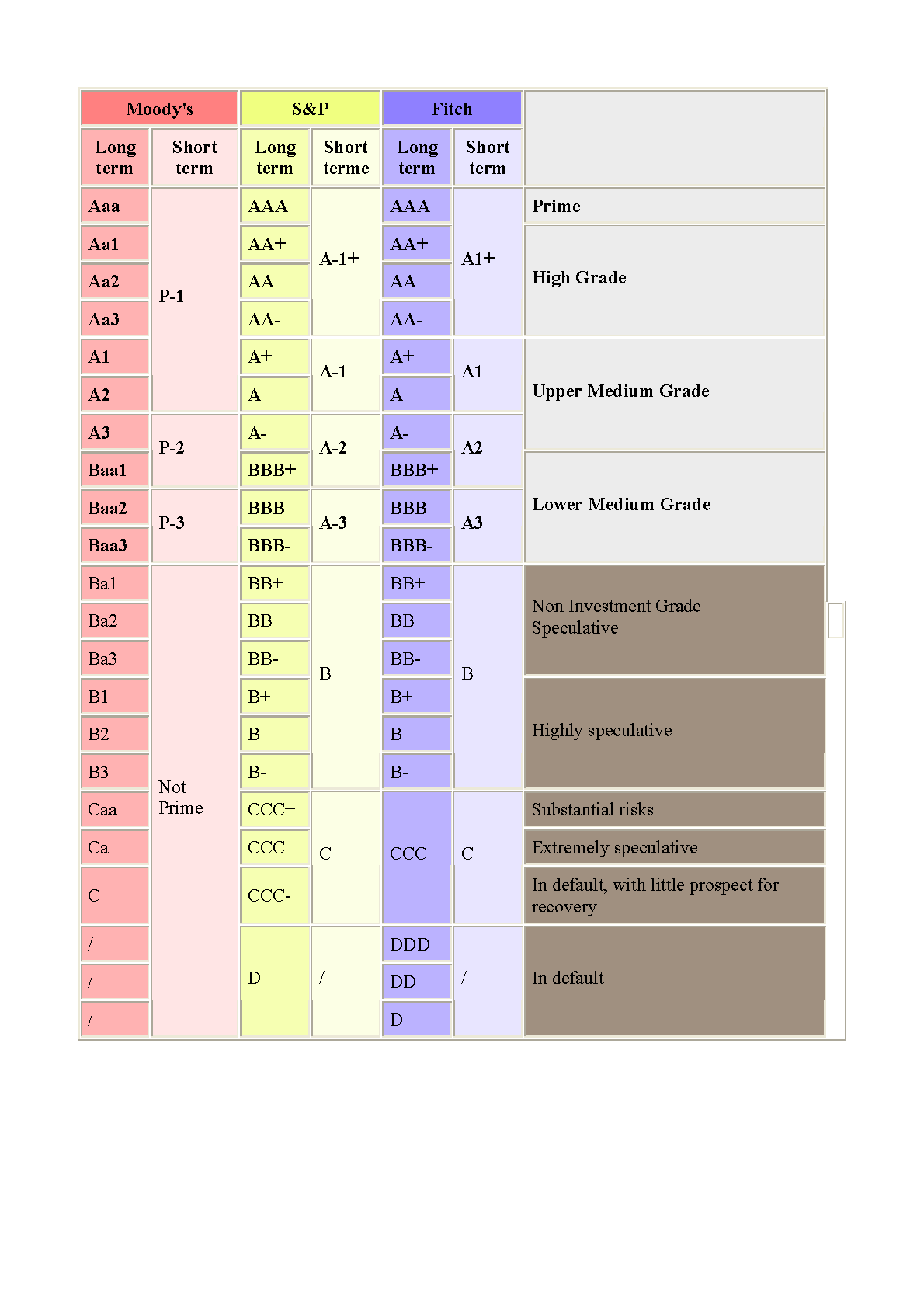
According to the prospectus of Hope Capital Bonds (HCB), they were supposed to issue a coupon payment in the form of a dividend on 2/2/2008. For the second time in a row (as well as the only times) HCB has defaulted to its investors.

It seems only fitting then that a credit rating of D be assigned to Hope Capital Ltd, for failing to pay interest to creditors.

Thursday, February 7, 2008

Musings

I've been studying more for my next RL actuarial exam, Modeling Financial Economics, and it always makes me think about the depth of subtleties of markets. The lesson on equivalent, or replicating, portfolios that I gave in a Lessons in FM has so much power to it, but is something that is also so hidden very few can see it. Did you know, for example, that you can replicate a call option by simply buying and selling stocks and low-risk bonds? (Specifically, for call options, you borrow some money, aka sell a bond, to buy the stock, and then they become equivalent. Of course, you have to get the proportions right, and that's not exactly easy to do...)


Yet, despite the depth and breadth of these studies, which I just get exposed to the tip of the iceberg on, it saddens me that so few are in on these great secrets. I doubt less than 1% of the avatars involved in the SL finances could tell me what an option delta is. If we make it only CEOs, maybe we can move that up to 20%. Can any fund managers in SL tell me what the volatility of their portfolio is? How is it correlated to the market (aka its beta)? Where is the greatest risk exposure? I laugh (usually aloud) at any prospectus which simply lists SL closing down or the devaluation of the Linden Dollar as the lone risk factors to their business.


Please note, I'm not trying to criticize anyone here. The subjects I'm talking about are definitely high-end mathematics, and would require some study which is not required of CEOs in SL. I'm only sad that although the SL capital markets have come so far in the past year, they still have so very far to go.
Google