


Tuesday, March 11, 2008
Distractions
Sorry I've been a little slow on posting this past week. I've been distracted by my RL work and the launching of an accounting firm partnership with iVentures Volitant. You can find that announcement here.

Saturday, March 1, 2008
Let the Games Begin!
With the WSE's announcement that it is leaving the Linden Dollar behind and going to trade solely in World Internet Currency units (WICs), the competition has begun for companies to be from the WSE to other exchanges. Already two have jumped ship: MAI and HOT, and one has sworn allegiance: DDE. As for the other side of the coin, to my knowledge two of the exchanges, VSTEX and CapEx are offering incentives for companies to switch. VSTEX is offering 10% off their IPO/relising fees, and CapEx is offering 100% off of them, both for a limited time.
It's an interesting battle, really. DDE's decision to stay surprised me greatly, as I would have thought that a business being conducted in Linden dollars, established in Linden dollars, and (until now) paying dividends until Linden dollars would have wanted to stay away from changing currencies and paying loads of transaction fees in order to bring any kind of value to their shareholders. But Delicious tends to know what she's doing, so maybe she's got something up her sleeve that I don't know about.
The question in my mind is how many of the WSE's 42 companies will jump ship in the next month. I really can't understand any retail or land company wanting to stay on the WSE now. Scripters and investment firms could still survive in WICs, since the scripters can simply request payment in USD and the investment firms should be savvy enough in whatever currency. I had originally thought the flight would be more severe, but so far it seems like companies are proceeding as normal, much to my surprise.
As to WSE 4.0 itself, I can only conclude that Luke Connell is attempting to reach outside the walls of Second Life, probably for at least two reasons. The first is that if he leaves Second Life and keeps the companies with him, he's outside the reach of Linden Lab's mighty ban hammer. The second reason is that he allows himself to list firms from other worlds, perhaps the Entropia Universe or IMVU. If it works, it could be amazing.
However, also I've got to wonder about the profitability of HCL at this point. We know HCL has defaulted twice on its bonds, and has had no income for 50-some days and counting. HCL owns an island with low occupancy, but tier still comes due, as well as a hefy (and ad-free, I believe) web server. According to the HCL income statements, HCL had L$8.3 million in profit (neglecting the L$2.78 million they owe in bond interest currently*) ending January 1, which is about USD$31,300. I'm not saying they're going bankrupt right away, but between all the expenses (who pays for Connell's RL expenses, anyway?) I've got to wonder if this conversion to WICs isn't just all smoke and mirrors to mitigate some deposit liabilities.
With no one demanding Linden dollars, who is to say what's happening to those dollars? While there may be an initial "dump the WICs" session, I imagine the WIC will be fairly illiquid. Some hefty transaction fees could make sure people keep their "game tokens" as WICs and not as Lindens, allowing Connell free use of all the Lindens deposited into the WSE.
But enough of the theories, I have a more important question to the CEOs of the WSE: Which of you will stand by a twice-defaulted exchange moving away from your primary transaction currency? Which of you will remain next to the CEO who has played a major role in the collapse of not one, but two of Second Life's major banking institutions? And how will you justify it to your investors?
*If anyone can explain to me how you can manage to post an L$8.3 million profit and yet not have L$2.8 million to pay your bondholders with, I'd love to hear that reasoning. Please include the mathematics behind it.
Sunday, February 24, 2008
Lessons in FM: Part VII - Futures
In one of my previous posts, I mentioned something about the mathematics of futures contracts and asked if anyone would like for me to expound upon the reference I made, and my co-author Samantha Goldflake (as well as other readers) called me out on it, so here goes.
First, I'd like to introduce what a financial derivative is, and from that what a futures contract is and how to value it. A financial derivative has nothing to do with the slope of a tangent line, but rather is an asset which derives its value from some underlying asset. Examples of this include mutual funds, put and call options, interest rate swaps, and futures. These assets all have no value whatsoever on their own, but only derive their value from what some other asset is doing. Many of the stocks in SL are actually financial derivatives.
As a personal note, I love financial derivatives. Financial derivatives are power. I've been asked, and have provided, guides and advice as to how to implement financial derivatives in Second Life to various exchange bigwigs, but so far nothing has come above of it. If any of you are considering doing something with derivatives, please send me an IM - I'd love to be involved.
To me, the most viable financial derivative for Second Life would be a futures contract. A futures contract specifies that an investor will either buy or deliver a set amount of an underlying asset at a set price at a set time. There is no option as to whether or not this sale/purchase will take place - it is set by the contract.
A lot of the numbers you hear tossed about in First Life financial commodities are actually futures numbers. The price of oil, for example, is almost always quoted as a futures price. The same is true with gold, silver, and other precious metals.
So how could you use this in Second Life? Simple - futures on the LindeX. Set up a price and a date, and then you've got a futures contract with USD for L$. Measures would have to be taken to prevent simply bailing out on the contract, but having investors place and x% deposit for taking the contract would probably suffice, depending on what x is.
Regardless, we may wish to know how to price these funky things called futures. It's actually surprisingly simple, and most of the mathematics I've already covered in my first Lessons in FM: Part I - Present Value. Technically, futures contracts with strike prices (the price specified in the contract) equal to the expected cost have zero premium, although in real trading there is always some transaction cost to doing this.
I slipped in the word "expected" to the definition above for a reason. Suppose we're doing a futures contract on a five-year zero-coupon bond yielding 10% per year, costing 1000 now and with an expiration date of 6 months from now. If the strike price is 1000, that contract will actually trade at a premium because 6 months from now the bond is worth more than 1000. We would expect it to be worth
1000*(1.10)1/2 = 1048.81
So the contract actually has a value of 48.81. For the contract to have zero premium, it must have a strike at the expected price of 1048.81, and then it will have zero premium.
First, I'd like to introduce what a financial derivative is, and from that what a futures contract is and how to value it. A financial derivative has nothing to do with the slope of a tangent line, but rather is an asset which derives its value from some underlying asset. Examples of this include mutual funds, put and call options, interest rate swaps, and futures. These assets all have no value whatsoever on their own, but only derive their value from what some other asset is doing. Many of the stocks in SL are actually financial derivatives.
As a personal note, I love financial derivatives. Financial derivatives are power. I've been asked, and have provided, guides and advice as to how to implement financial derivatives in Second Life to various exchange bigwigs, but so far nothing has come above of it. If any of you are considering doing something with derivatives, please send me an IM - I'd love to be involved.
To me, the most viable financial derivative for Second Life would be a futures contract. A futures contract specifies that an investor will either buy or deliver a set amount of an underlying asset at a set price at a set time. There is no option as to whether or not this sale/purchase will take place - it is set by the contract.
A lot of the numbers you hear tossed about in First Life financial commodities are actually futures numbers. The price of oil, for example, is almost always quoted as a futures price. The same is true with gold, silver, and other precious metals.
So how could you use this in Second Life? Simple - futures on the LindeX. Set up a price and a date, and then you've got a futures contract with USD for L$. Measures would have to be taken to prevent simply bailing out on the contract, but having investors place and x% deposit for taking the contract would probably suffice, depending on what x is.
Regardless, we may wish to know how to price these funky things called futures. It's actually surprisingly simple, and most of the mathematics I've already covered in my first Lessons in FM: Part I - Present Value. Technically, futures contracts with strike prices (the price specified in the contract) equal to the expected cost have zero premium, although in real trading there is always some transaction cost to doing this.
I slipped in the word "expected" to the definition above for a reason. Suppose we're doing a futures contract on a five-year zero-coupon bond yielding 10% per year, costing 1000 now and with an expiration date of 6 months from now. If the strike price is 1000, that contract will actually trade at a premium because 6 months from now the bond is worth more than 1000. We would expect it to be worth
So the contract actually has a value of 48.81. For the contract to have zero premium, it must have a strike at the expected price of 1048.81, and then it will have zero premium.
To value these contracts then, you have to figure out your payoff and then discount it back to the present value. That's where my previous post comes into play - present value. The payoff on a forward contract is simply:
With the profit equal to
Therefore, to calculate the value for a futures contract expiring at time t, just calculate
Where i is the interest rate being used. i varies depending on what you're valuing. With bonds, it's the interest rate. With stocks, it tends to be the dividend yield. With currencies, it's the interest rate in the currency you're using. So, for my futures contract on the LindeX, we'd have to use the Second Life interest rate (or USD interest rate, if we were buying the Lindens) to discount to present value.
I hope this helps demonstrate what futures are and how they work. As I mentioned above, they're used quite frequently in real-life commodity trading, and almost every farmer in the United States is familiar with them. (They tend to sell futures contracts early in the season to ensure they sell their crop at harvest.) If you have any questions, by all means ask!
GM
Saturday, February 23, 2008
The Depreciation of Trust
The SLW conversion is complete, and traders on SL CapEx are now fully capable of withdrawing Lindens from the sales of their stocks. Yet, much work remains to be done.
On the public relations front, the most pressing issue I can see is newbies who somehow have gone blindly throughout life with no comprehension whatsoever of how a stock market functions. They stumble in, rant about where their money is gone, are pointed to a news posting, and then slowly realize the truth of the matter: Their portfolio is now worth 55% of what it was when they were a happy JTF Bank customer (current SLW price is 0.55-ish).
This problem is compounded by the fact that many of these customers don't speak English as a first language or maybe even at all. I do not fault these people for being confused, as it's a complex enough topic to handle for native speakers like myself. CapEx has made a good effort in reaching out to these people, and I hope CEOs are doing the same. Verballis may be able to help.
However, now it is time to look at another issue of the conversion: Trust. Trust is a funny thing to talk about in the financial, economic, or mathematical sense of the word. It certainly has value, but yet how to value it remains a near mystery. The branch of study known as Game Theory delves into this topic in great detail by applying certain "games" that try to quantify trust into a dollar value. If you ever hear of someone looking for volunteers for a Game Theory study, sign up - you will most likely walk out of the room with cash.
SLW presents another interesting way to try to quantify trust. Arbitrage Wise has promised to pay L$1.03 for each share of SLW at some future date. He has not released a date when this can be expected to occur, however. So, the question then becomes, how much is a promised L$1.03 from Wise worth? As mentioned above, it is currently worth L$0.55.
The far more interesting thing to me, however, is that this value is decreasing. After its initial volatility, SLW appears to have established a downward trend of about L$0.03 per day. (To be fair, one day it did rise L$0.03, but then fell L$0.06 the next.)
The market is giving Wise an idea of how much time it will be willing to wait for him to bring new funds into the market. For former depositors, these shares represent forward contracts of L$1.03 with an unspecified settlement date. I believe what is causing them to increase is a perceived increase in the risk premium or settlement date of SLW, or both. (Note: If anyone would like me to go through the mathematics of this, let me know and I'll work up another Lessons of FM for it. Don't be afraid to ask - it's just too much for this post.) At present, the market appears to be losing faith in Wise's promise at a rate of about 5% per day.
What can be done to avoid this? Well, this post on the CapEx forums caught my eye. While I don't agree with the abrupt manner the request is presented in, I do agree with the premise: it's time for a show of financial power and honestly from Wise. L$100,000 would go a long way towards buying some faith back in SLW, as would a metric posted somewhere showing how many shares have been repurchased to date. Even better is the fact that with renewed faith will come new buyers, pushing the price up and getting the most vocal and impatient of the depositors out the door, which giving the shares to more patient and positive investors.
I await a price spike.
Wednesday, February 20, 2008
SLW Follow-Up
Sometimes markets roar, and sometimes they whisper. Check out my price prediction of SLW below, and then go look at what it's trading at now. I love financial math.
Note: at the time of this writing, SLW has a bid of 0.60 and an ask of 0.64, and has been about that level for nearly 24 hours.
Note: at the time of this writing, SLW has a bid of 0.60 and an ask of 0.64, and has been about that level for nearly 24 hours.
Saturday, February 16, 2008
SLW Conversion Commentary
On Wednesday night I contacted Bogart Beck about raising the upper-level circuit breakers on CapEx in expectation of heavy trading the following day. I was right.
I'm not gloating too much - it doesn't take a great leap of logic to see that people are scared of SLW and will hold on to just about any other security in order to get rid of the possibility of having them. That's what's pushing CapEx prices up currently. Investors aren't trading Linden dollars anymore - they're trading SLW shares for other shares, and trying to get the best rate they can. Although JTF/CapEx has fixed a price target of L$1.03 for SLW, investors clearly aren't buying that.
I closely watch the SLR stock price, so I'm going to use it for an example. For the past few months, it's been creeping up from L$0.50 to L$0.75, and throughout January has held pretty steady around L$0.75. Today, however, it hit L$1.20. That's an increase of 60%! To me, that's not an increase in the value of SLR, but rather a decrease in the value of SLW. Since we know the share value of SLW is supposed to be L$1.03, we can solve to find out what these traders are valuing SLW at (maximum):
L$0.75 / x = L$1.20
x = L$0.625
These buyers are putting the SLW value at less than L$0.63 each. Looks like the market is expecting a panic...but we already knew that. You can't even read the CapEx forums now without some head-in-the-sand noob screaming "I WNAT MY MONEYS BACK!!! NOW!!!" I even heard a trader in CapEx today claiming that he was going to buy some BTR in hopes of selling it quickly at L$75.00 each. Market forces quickly brought the ask prices back in line, dashing the hopes of this trader, but it still served as an example to me of how confused these traders can get.
But let's stop keeping pace with the market at this point. Let's step up our pace and think one or two steps ahead of the general traders. We know the market is expecting a crash, and I've heard several big players say that they'll happily buy up cheap SLW shares from these fools. I may even throw in a few lowball bid offers in hopes of downward spikes. Those big players may keep SLW above the catastropic predictions and calculations the market is currently generating.
Also, everything I can see says that people are already ditching their SLW - they're just doing it by buying other stocks. That shrinks the supply of SLW shares available from the most active traders, which is another upward thrust for SLW prices. I still think it'll fall below L$1.00 in a heartbeat, but maybe it won't go so low as the calculation above suggests.
These traders and bank depositors want their cash. I suspect they'll take a hit to get to it. But they're not holding SLW shares anymore - they're holding some of their favorite company, or maybe every company. Therefore, I expect the drop in prices to be more severe among other CapEx companies than SLW, at least after the major spikes stabilize. How severe? I'm not sure, but bargain investors will find a huge sale going on at the CapEx next week.
So how do you make money in this market? I've been placing high sell orders on all my stocks and I'm preparing to hold SLW shares until prices stabilize. All orders should be canceled at the conversion, so there is no harm in placing them. Once SLW prices are steady, it should just be a matter of cashing out.
Unless, of course, something unexpected happens.
Saturday, February 9, 2008
Hope Capital Credit Rating
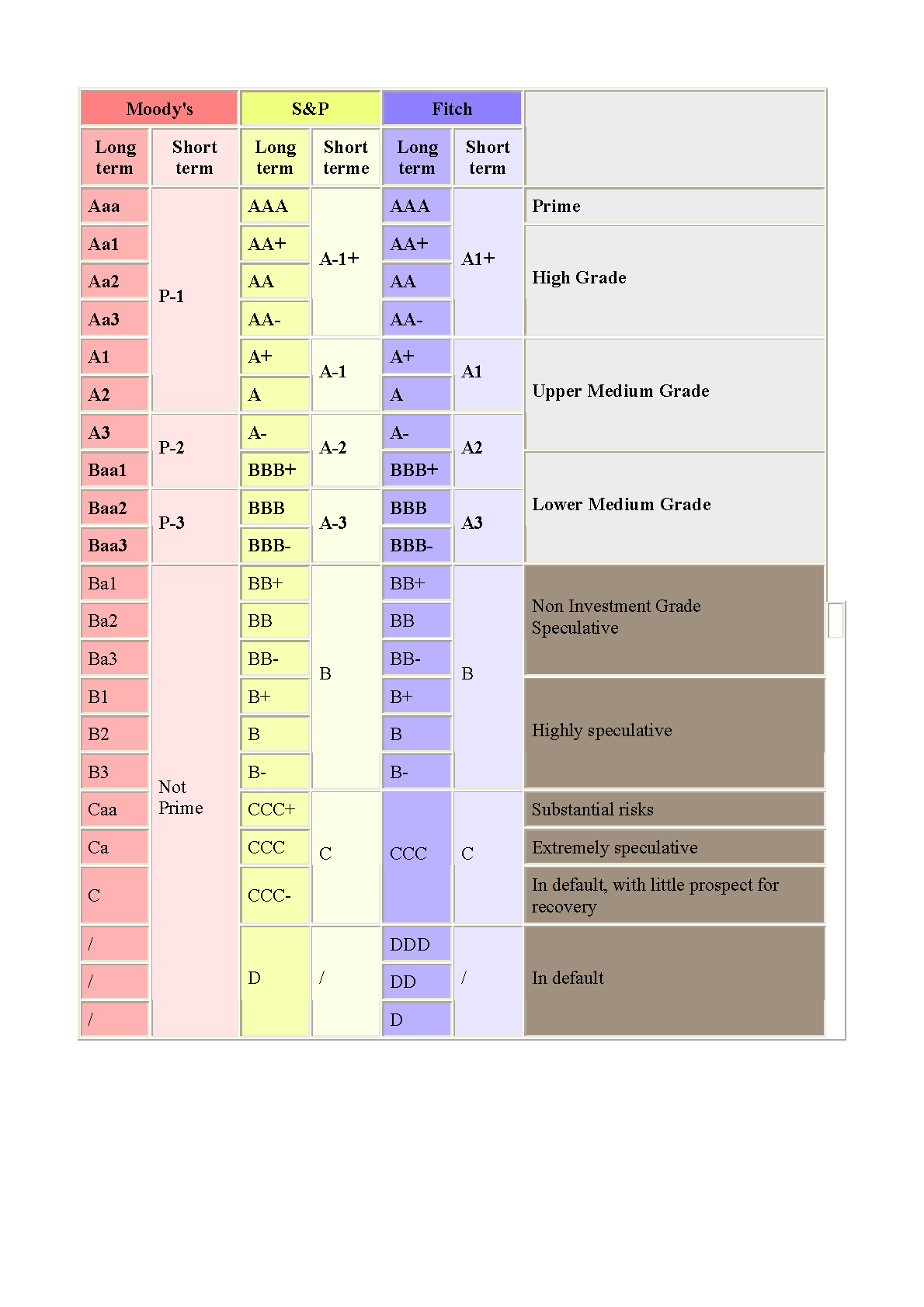
According to the prospectus of Hope Capital Bonds (HCB), they were supposed to issue a coupon payment in the form of a dividend on 2/2/2008. For the second time in a row (as well as the only times) HCB has defaulted to its investors.
It seems only fitting then that a credit rating of D be assigned to Hope Capital Ltd, for failing to pay interest to creditors.
It seems only fitting then that a credit rating of D be assigned to Hope Capital Ltd, for failing to pay interest to creditors.
Thursday, February 7, 2008
Musings
I've been studying more for my next RL actuarial exam, Modeling Financial Economics, and it always makes me think about the depth of subtleties of markets. The lesson on equivalent, or replicating, portfolios that I gave in a Lessons in FM has so much power to it, but is something that is also so hidden very few can see it. Did you know, for example, that you can replicate a call option by simply buying and selling stocks and low-risk bonds? (Specifically, for call options, you borrow some money, aka sell a bond, to buy the stock, and then they become equivalent. Of course, you have to get the proportions right, and that's not exactly easy to do...)
Yet, despite the depth and breadth of these studies, which I just get exposed to the tip of the iceberg on, it saddens me that so few are in on these great secrets. I doubt less than 1% of the avatars involved in the SL finances could tell me what an option delta is. If we make it only CEOs, maybe we can move that up to 20%. Can any fund managers in SL tell me what the volatility of their portfolio is? How is it correlated to the market (aka its beta)? Where is the greatest risk exposure? I laugh (usually aloud) at any prospectus which simply lists SL closing down or the devaluation of the Linden Dollar as the lone risk factors to their business.
Please note, I'm not trying to criticize anyone here. The subjects I'm talking about are definitely high-end mathematics, and would require some study which is not required of CEOs in SL. I'm only sad that although the SL capital markets have come so far in the past year, they still have so very far to go.
Tuesday, February 5, 2008
Surprise!
Unless the WSE goes and opens in the next five hours (while I'm asleep), then they will be late on their promise to open within 30 days.
Who's surprised? Not I.
Who's surprised? Not I.
Sunday, February 3, 2008
Watching
This week should be an interesting week in SL finances. We've got a couple of big events which I expect to break, and there will of course be the others that we never see coming.
First up, I'm curious to see how the Metaverse Investment Fund does on its second week in the market. I wrote an (objective) article about the MIF on SL Reports, but this is my space to post so I don't have to be objective here - just respectful - something a few of the commentators on that story seem to be having trouble understanding.
Anyway, I've known Shaun since my early days in SL, and he's a good fox and has done very well investing. That being said, I don't think this market merits any new investments whatsoever, and I'm still not convinced about the 3.5% commissions on both sides of the transaction. That means you've got to earn about 6.9% just to break even! That's too steep for my value investment mindset.
Next, this week should see the re-opening of the World Stock Exchange. As was posted on January 6, 2008,
We are upgrading many areas of our services and the website as part of our launch for the WSE 4.0 platform. This is a huge undertaking and we have now entered a phase of development that requires the WSE to close all trading and transactions for "up to" 30 days.
I still haven't figured out why "up to" deserves quotes, but I do know how to count, and February 5th is 30 days from January 6th. Day traders get ready - I expect some serious volatility, mostly in the downward direction, when WSE goes live again. There will be lots of investors just wanting to get their cash out, and they've been cooped up for a whole month to get nervous about it. Extremely brave souls can find a good buyers market here. I'm just hoping we lose that audio announcement on the front page.
Finally, during this week we'll get a peek inside the financials of companies required to do monthly reporting. It'll be our first glance at how badly the banking ban hit the Second Life economy, and the Lindens should be releasing economic statistics sometime in the near future as well.
This past week, I posted my first set of financials for SL Reports...and only one person ventured a question. I'm hoping this is because my statements and commentary were sufficient, but honestly I was expecting an onslaught of inquiries, both on forums and in-world. Oh well - no news is good news...unless you need web traffic.
GM
Subscribe to:
Posts (Atom)